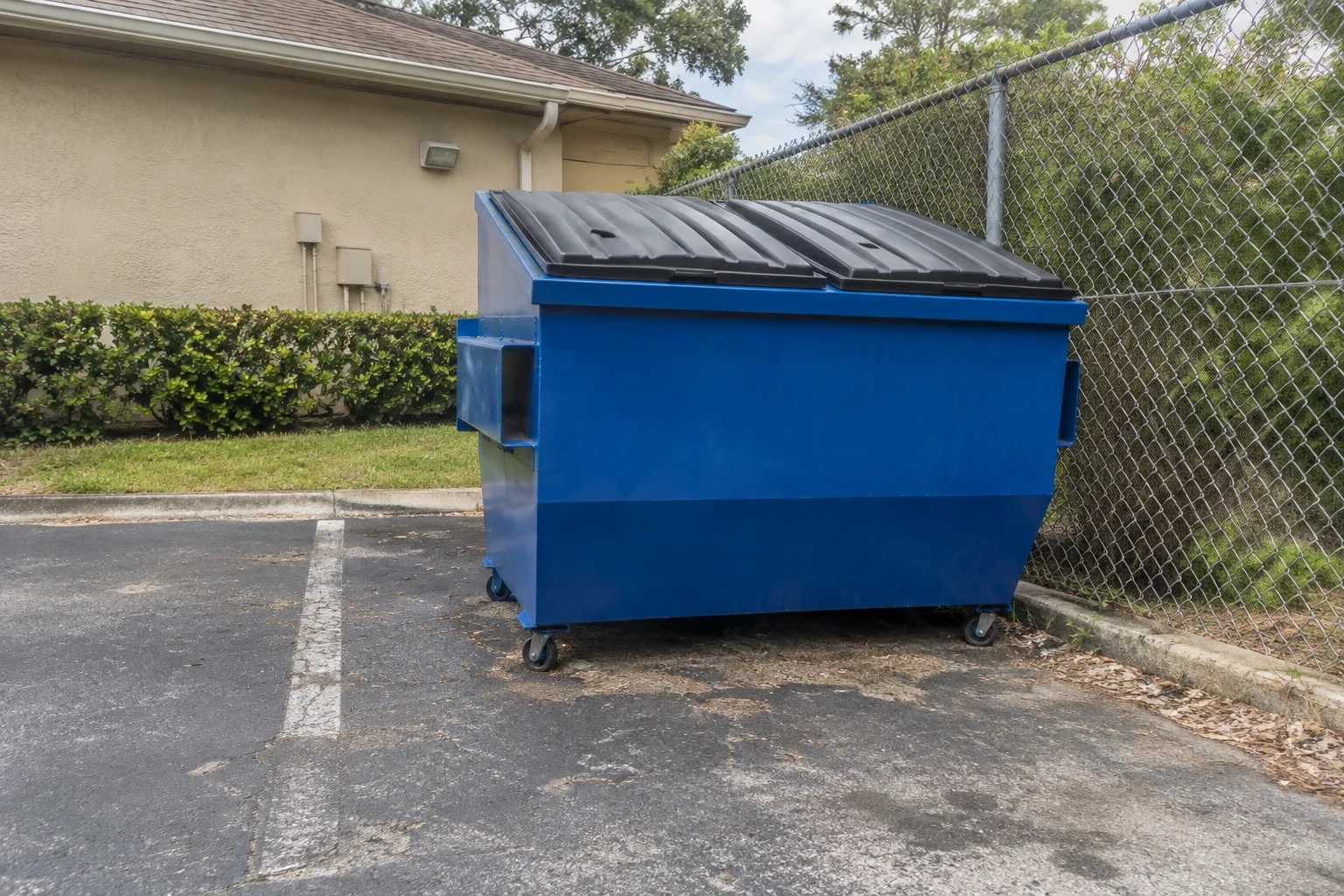
ServicesFront Load Dumpster Service
Deltona Front Load Dumpster Service
A front load dumpster stays behind your business and gets emptied on a regular schedule. We match the size and pickup days to the trash you really make, and if a smaller setup will handle it, we say so.
What front load service is and who it fits
Front load dumpsters are the steel containers with lids you see behind restaurants, shops and offices. They stay on your lot. Our truck comes on the days we agree on, lifts the container over the cab with its forks, empties it and sets it back down. You don't need to be there.
This is the right call for steady, everyday trash: food scraps, boxes, packaging, office waste. If you are clearing out a building or tearing out a space, you want a roll-off instead, and our Roll Off Dumpster Rental page covers that. Front load is for trash that keeps coming week after week.
Here is how we work. Before we put you in a bigger container or add a pickup day, we look at what you already have. A lot of overflow comes down to whole boxes eating half the bin, or a pickup day that lands right before your busiest stretch. If the answer is that small, we say so. If your business has outgrown the setup, we explain why and size it up.
What comes with front load service
- Sized to what you throw out
- Front load containers come in several yard sizes, from small ones for offices to bigger ones for busy kitchens. We pick yours based on your trash, not on the largest box your pad can hold.
- Placement the truck can reach
- The container goes where the truck can pull straight up to it, with space for the forks and nothing low overhead. Before drop-off we flag low branches, wires or tight corners.
- The same pickup days every week
- Your container is emptied on fixed days. Plenty of offices do fine with one pickup a week. Restaurants and stores usually need two or more.
- Lids that shut
- Each container has lids, and keeping them closed matters. Food waste begins to smell within a day or two in Florida summer heat, and a shut lid keeps afternoon storms from soaking the trash and making it heavier.
- Adjustments when things change
- Your season picks up or slows down, your staff grows or your hours shrink. Let us know and we change the size or schedule, and we will say so when scaling back is the better move.
Signs you need front load service or a better setup
Bags piling up next to the bin
If trash sits on the ground by pickup day, the container is too small or emptied too rarely. A second pickup day often solves it without a bigger box.
Staff hauling trash off-site
Loading bags into a pickup truck and driving them somewhere costs hours every week. A container on your lot ends that chore.
Smell, flies or animals
Odor and pests usually mean food waste sits too long. More frequent pickup does more good here than a larger container.
A half-empty bin every pickup
You may be paying for space you never use. A smaller size or fewer pickups could fit better.
Boxes filling the dumpster
Whole cardboard boxes take up space fast. Flatten them before you decide you need more yards.
What sets the price
Front load service is billed on a recurring basis, so the setup you choose matters more than any single pickup. We give you a quote by phone once we know your volume and location. Every lot and schedule is different, so we don't post one number for everyone.
Container size
More yards cost more. The smallest size that holds your trash between pickups keeps the bill down.
Pickup frequency
Each extra pickup day adds cost. Some businesses do better with a smaller bin emptied twice a week than a big one emptied once.
What goes in it
Heavy, wet loads weigh more than dry boxes and paper. Paint, tires, batteries and other hazardous items don't belong in the container at all.
Access and location
Gates, tight drives or a spot the truck has trouble reaching can change the price. Where you sit on our route, from Deltona out to towns like DeBary or Orange City, plays a part too.
How we get you set up
- 1
Call us about your trash
Tell us what kind of business you have, roughly how many bags or boxes go out in a typical week, and where a container might sit. On that same call we recommend a size and schedule and quote it.
- 2
We check the spot
We look over the pad or lot to make sure the truck can get in. It pulls straight up to the container, so it needs an open path and clearance above.
- 3
Drop-off
The container arrives on the agreed day. We show you its spot and run through what has to stay out of it.
- 4
Pickups on schedule
The truck shows up on your set days. Your only part is keeping the lids shut and the path open.
- 5
A review after a few weeks
Once a few pickups are done, we see how full the container runs. If it is overflowing or close to empty, we change the setup so you are not paying for the wrong one.
Questions about front load service
What sets front load apart from a roll-off?
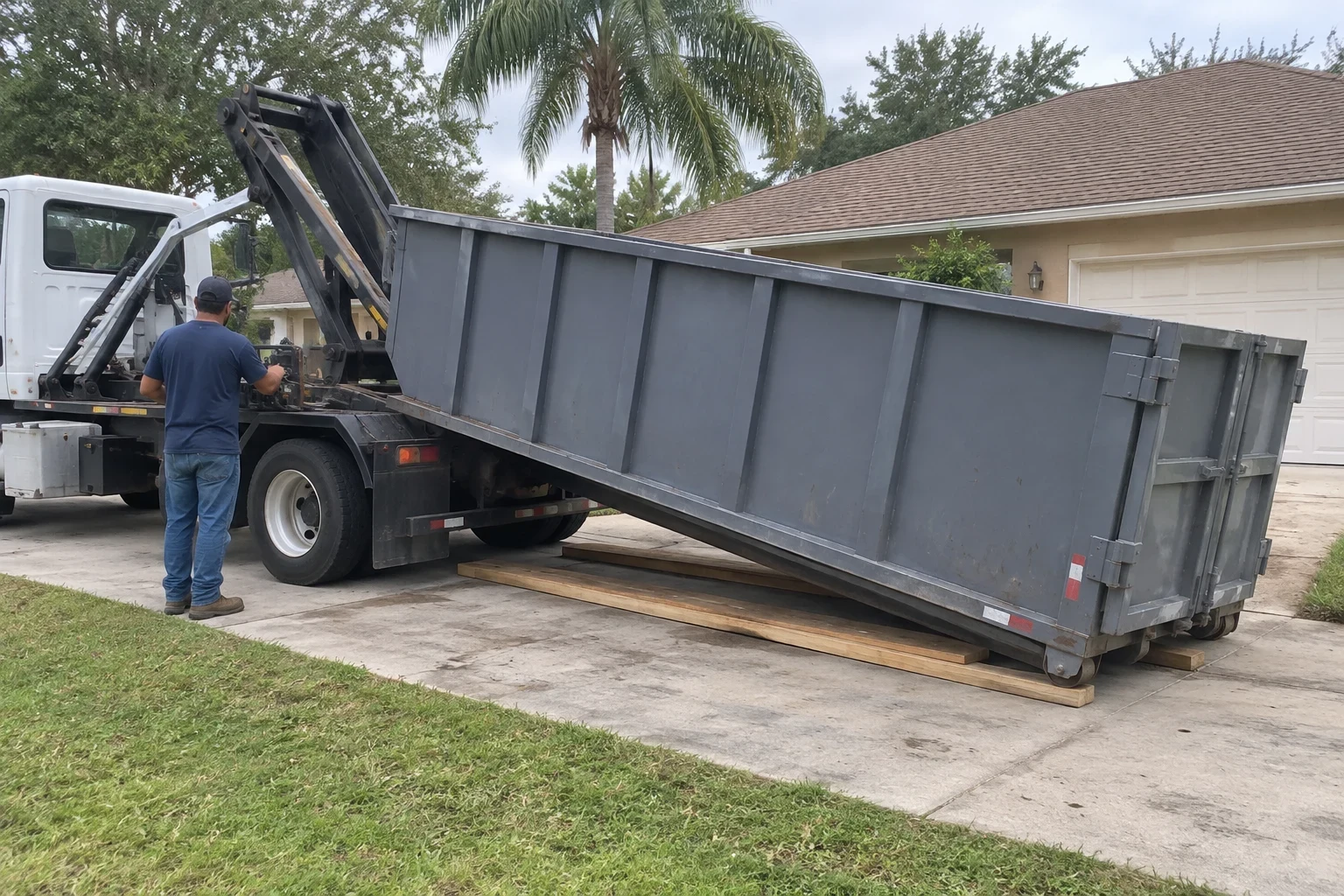
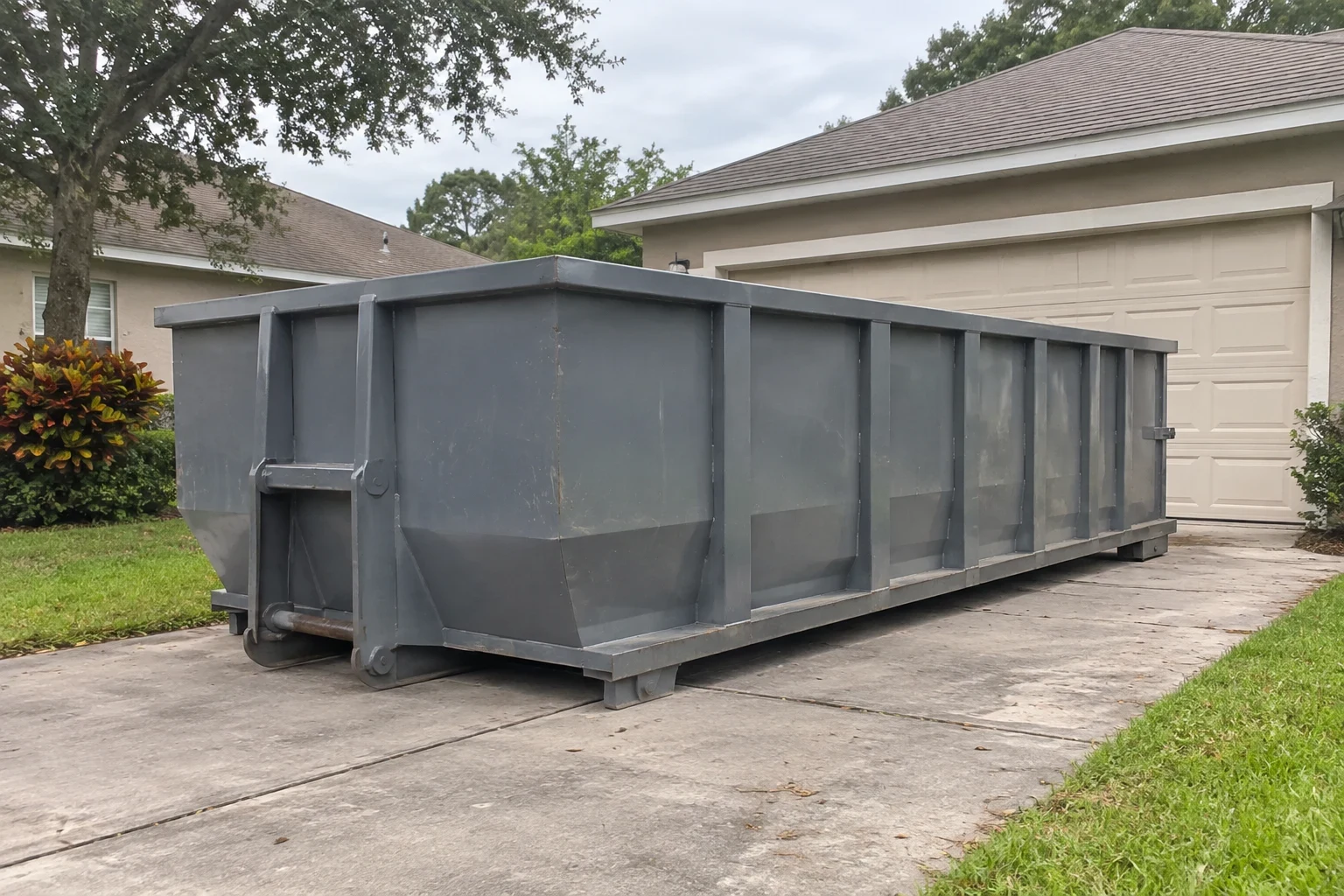
A front load container stays on your property and gets emptied on scheduled days. A roll-off is a larger open box we bring for one job, like a cleanout or remodel, and haul off when it's full. Steady, ongoing trash fits front load. One project's debris fits a roll-off.
How do I know which size to pick?
Count up an ordinary week of bags, boxes and food waste. Tell us on the phone and we'll suggest a size. If the first few pickups show it's too big or too small, we swap it.
Do I need to be there when the truck comes?
No. The driver only needs the lids down and an open path to the container. Most missed pickups happen when parked cars or delivery trucks are in the way.
What can't go in a front load dumpster?
No hazardous items like paint, oil, batteries, tires or chemicals. Large amounts of heavy construction debris belong in a roll-off. If you're unsure about something, check with us before tossing it.
Can my schedule change later?
It can. Lots of businesses get busier in winter when seasonal residents come back and slow down over the summer. Tell us what changed and we'll adjust the pickup days or the container size.
Will you keep pushing me toward a bigger container?
No. If breaking down boxes or moving the pickup day stops the overflow, that's our first suggestion. We only bring up a larger container or more pickups when your volume really calls for it.
Start with the right size, not the biggest one
Tell us about your business and your trash, and we will set up a container and a schedule that fit. You get a quote by phone and a plan you can change later.